Sunday, 15 February 2015

Awesome Almonds!


Eaten just plain or added as a component in various dishes, the uses of almonds form a large spectrum. Be it plain, salted, roasted or flaked, Almonds easily top the list in nutritional quality among the nuts. Even more beneficial is the almond oil derived from it which can be made into almond butter or almond milk.

 Many people think of the term “fat” as the demon of the food. But the fact is that fats are not only essential for your body but also beneficial for overall well being. Mind you, choose the right type of fats.  100 g of almonds contain around 49g of fat, which goes up to 75% of your Daily Value. But a handful of these are loaded with monounsaturated fatty acids, which will help you decrease your LDL levels (bad cholesterol) and increase your HDL levels (good cholesterol).

Being an excellent source of Vitamin E, it provides 1.25% of daily value i.e., approximately 25mg per 100g of almonds. Vitamin E being an effective antioxidant reduces the risk of heart diseases and boosts the body’s immunity. Also if you have almond oil handy, say good bye to all your beauty care products.

Almonds are a good source of dietary fibre which helps to prevent constipation and despite being eaten in small amounts it gives the feeling of satiety. Therefore, it is an essential part of a weight loss diet.


Wonderfully rich in vitamins and minerals, they are also packed with health promoting phytochemicals. It contains folic acid which is necessary during pregnancy.

The digestion of almonds helps to alkalize the blood and as a result maintains its alkalinity and prevents leaching of calcium from the bones which happens due to intake of acidic foods.

Almonds also contain nutrients that boost brain activity and are known to reduce the risk of Alzheimer.

A handful of almonds fulfill most of the daily requirements of proteins, vitamins, minerals and essential fats. 

Add the crunch to your diet!

Note:  Always remember the fistful rule. Not more than a handful of almonds per day. More than recommended intake can cause overdose of Vitamin E, weight gain and excess fats. 

Post by Zohra Sada

Friday, 13 February 2015

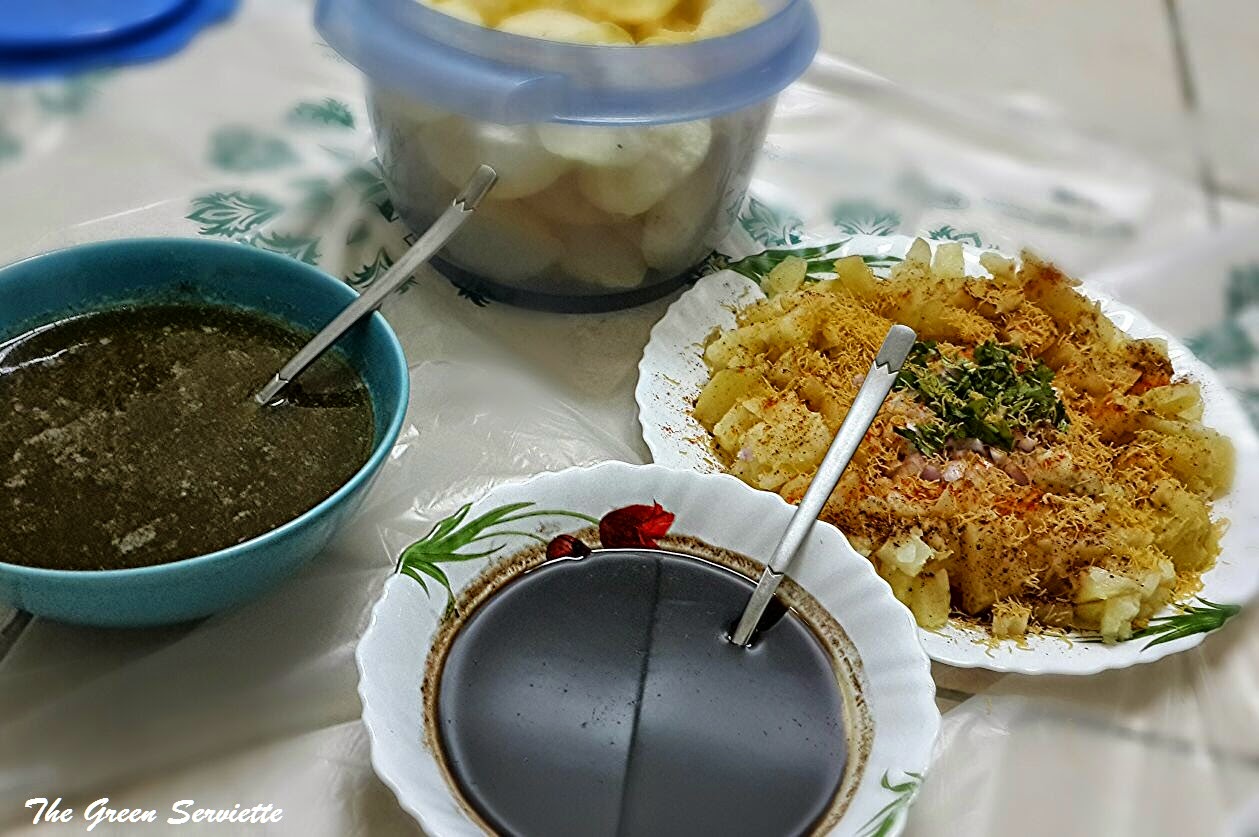
Pani and Stuffing for Pani Puri


For those of you who don’t like pani puris just because you have negative experiences with sanitary conditions of the pani puri stalls or those who can’t handle the extreme spice, don’t worry just make your own pani puris at home. Add your own flavours and make your own individual variations.

This recipe shall guide you to make the most amazing pani for the pani puri. I love my pani puris with the green spicy pani and also with the meetha pani. The combination of the two is just perfect. Adjust the spiciness according to your taste buds.

This recipe is sufficient for making 30 pani puris.

Basically the pani doesn't amount for much calories and even the stuffing contributes to calories only from potatoes and sev. This recipe in total provides for approximately 389 Calories.

For green spicy pani:


Here is what you’ll need:

1 litre water
1 cup mint leaves (Pudina)
2 tbsp coriander leaves 
2-3 green chillies
1 inch ginger
1 tsp chat masala
½ tsp jeera powder
1 tsp sugar
1 lemon size ball tamarind
Salt as per taste


Method:

  1. Blend all the above ingredients in a blender in one go.
  2. Serve chilled in a large bowl. 

For the sweet pani:


Here is what you’ll need:


2tbsp seedless tamarind paste
2 tsp sugar/jaggery

Method:
  1. Mix the jaggery/sugar with tamarind paste till completely dissolved.
  2. Add water to increase quantity

For the stuffing:


Here is what you’ll need:

1 large potato
1 onion
1 tsp coriander leaves
Chat masala
Red chilli powder
Nylon sev/ bhujia
Salt as per taste
Chickpeas (white chana) (optional)

Method:

  1. Pressure cook the potatoes and mash it.
  2.  Finely chop the onion.
  3. Sprinkle the chat masala, red chilli powder, salt and coriander on the potatoes and onions.
  4. For the stuffing, chickpeas and nylon sev is an option.


Learn to make Puris for pani puri in The Kitchen Counter column.

 Recipe by Zohra Sada

Wednesday, 11 February 2015

Puris for Pani Puri


Panipuri/golgappas/puchkas/phulkis, call it whatever you like. Just like the name varies from region to region so does the flavor and stuffings. I have many good memories from college times with panipuris. Standing on the street side with friends…and going for the second plate. One of my friends making that scrunched up face. She doesn’t like panipuris…( weird no?).

Now that I’m not in India and there are no panipuri stalls, my undying love for panipuri is still very strong. So, I just resorted to making the pani and the puris at home.

Making puris is not that difficult as it seems and if done the right way, trust me, it’s much better than having from outside. 

For making the puris, follow the exact process for making the perfect puris. I promise it won’t go wrong. (Don’t mix everything at once). This is a two step process, where I fry it once and then bake it in the oven to make it crisp and oil free.

This recipe makes 30 puris.

One serving (6 puris) will provide approximately 156 Calories.

In a large bowl, mix semolina, salt and baking powder.


Add ¼ cup of lukewarm water and mix till all the water is absorbed. (Don’t knead)


Add a tbsp of all purpose flour and knead for 4-5 mins. (Keep a timer if you need)


Add a tsp of oil and knead again for 4-5 min.


Once this is done, cover the dough in a cling wrap and rest it on the counter for 25 minutes. 


Get ready to start rolling the dough.


Take a portion of the dough and make it into a big circular roti. Using a bisuit cutter/ bottle cap cut out circles.


 Roll each of the cut out puris again into super skin thin puris.


Deep fry the puris in hot oil. Using a slotted spoon press each puri a little so it puffs up.

If done the right way, all your puris should puff into beautiful balloons. Ah! The joy it gives. I like my puris white and not browned. (No…not being a racist)

Immediately transfer the puris onto a newspaper to drain all the oil.


At this point your puris will appear to be soft. Don’t worry. Preheat your oven and keep it at the lowest possible temperature.  Line the baking tray with paper towels or just newspaper. Arrange the puris and leave the puris in the oven for 20 min.

When they come out they shall be super crisp and oil free.


So here it is… guilt free puris for your pani puris. 

Keep it in an airtight container and store it for whenever you’d like to make your pani puris.

Here is what you’ll need:

½ cup semolina
1/8th tsp baking powder
¼ tsp salt
¼ cup warm water
1 tbsp all purpose flour (Maida)
1 tsp oil
Oil for deep frying

Method:

  1. Mix the semolina, baking powder and salt in a large bowl.
  2. Add lukewarm water and mix till the sooji soaks up all the water.
  3. Add all purpose flour and knead the dough for 4-5 minutes.
  4. Once the dough is kneaded add 1 tsp oil and knead it again for 4-5 minutes.
  5. Cover the dough and rest it for 25 minutes.
  6. Start rolling the dough and cut into smaller circles.
  7. Deep fry till it puffs and get the desired colour.
  8. Keep it in a preheated oven at 200°F  for 20 mins.
Recipe by Zohra Sada

Monday, 9 February 2015

Hepatitis

Hepatitis is a disease of the liver. It is a condition in which inflammation of liver occurs, resulting in damage of the liver cells. Hepatitis can be acute or chronic and caused due to different strains of viruses such as A, B, C, D and E.

Hepatitis A is an infectious disease caused by hepatitis A Virus (HAV). It is common among children and young adults. It is caused due to contaminated water, food and sewage and transmitted by fecal-oral route.

Hepatitis B and C are caused by HBV and HCV. It is severe and prolonged in nature and can be fatal. It is transmitted by blood transfusion, improperly sterilized medical instruments, dental drills, skin puncturing instruments in contact with blood, sexual contact and saliva.

Hepatitis D is caused by HDV, co-infection with HBV or superinfection using HBV carrier.

Hepatitis E is caused by HEV and transmitted by oral fecal route. It is seen in unsanitary crowded areas.

The symptoms of Hepatitis are generally itchy skin, fatigue and fever, lack of appetite, nausea and vomiting, weight loss, jaundice, enlarged liver and spleen, mood swings, pain in the joints of the body, autoimmune problems and associated with high risk of cancer.

Various other causes of Hepatitis are Viral and Non-viral infections, use of certain drugs, alcohol consumption, poisons, autoimmune disease, metabolic disorders and biliary obstruction.

The goals of dietary management are to maintain optimal nutritional status, regenerate liver tissue and prevent further liver damage, prevent breakdown of body protein tissue, promote positive nitrogen and energy balance, replenish the depleted reserves, prevent symptoms of encephalopathy and to prevent the relapse and promote recovery.


A high protein, high carbohydrate, moderate fat intake diet is recommended. Following is the recommended nutrient intake for the management of hepatitis:

Nutrients
Note
Energy, Kilocalories (KCal)
Energy requirements are increased by 15-30%.
3000 KCal and above is recommended (35-40 Kcal/kg of IBW) to ensure weight gain and replenishment of glycogen reserves during convalescence phase.
Carbohydrates(g)
They should provide 60% of total calories. 300-400g of carbohydrates is recommended. It should be available for protein sparing action. It should improve glycogen stores. Dietary fiber should be reduced or should be given in soft cooked form.
Protein(g)
Protein intake is increased by 50% - 100% in mild and moderate cases, decreased in impending cirrhosis (1g/kg IBW).
 1.5-2g per kg IBW is recommended.
High protein supplement beverages are recommended in between meals.
It helps to prevent negative nitrogen balance and hypoproteinemia (low protein levels in blood).
It prevents tissue degeneration and fatty infiltration of cells.
Fat (g)
Moderate fats (20%) are recommended. Medium chain triglycerides are preferred as they are easily digestible and assimilated. E.g. Dairy fat, cream, butter, coconut oil etc.
Vitamins and minerals
Vitamin B and C, folic acid, calcium, magnesium and zinc, Sodium restriction. B-carotene rich foods should be included. Include fresh fruits and vegetables in soft cooked form like mashed pureed vegetables, vegetable soups, fruit juices, fruit jellies, jams, milk shakes, stewed fruits etc.
Fluids
They are increased in diarrhoea- clear and full fluids
Clear fluids- coconut water, tea/coffee (without milk), barley water, strained vegetable/pulse/meat soup, strained juices, strained carrot juices/rice kanji water, etc.
Full fluids- Milk based beverages such as tea, coffee, milk shake, souffle, baked custard, soup, juice, egg nog, fruit jellies etc.


A high energy, high protein diet is recommended for patients with mild to moderate hepatitis. If vomiting and diarrhoea is severe, a full fluid or a semi solid soft diet is seen. Small, frequent, easy to digest, bland meals should be served. The meals should look attractive; provide variety in colour, texture, taste, flavour and mouth feel. Moist methods of cooking such as boiling, pressure cooking and steaming are preferred.


Post by Faiz Lahori

Saturday, 7 February 2015

Tandoori Chicken Pizza


When Indian and Italian taste fuses it creates an explosion of cheesy happiness and yumminess.

Tandoori chicken is popular all over India and Pakistan. The rich spicy chicken marinated in yoghurt and tandoori masala can make your mouth water. See, I’m going off tangent and talking about tandoori chicken rather than pizza.

I don’t marinate the chicken in yoghurt for making pizza. Just chop the chicken into small pieces, mix it well with red chilli, ready tandoori powder, lemon and salt. Then cook it on the stove top or grill till well cooked. If you have left over tandoori chicken, then go ahead and add it.

If you have never made the dough for pizza, roll up your sleeves and get ready.  The taste of your hardwork is going to be much sweeter. (yummier)

This recipe makes 8 slices of Tandoori Pizza.

One serving of this recipe provides approximately 297 Calories.

For the dough:


Here is what you’ll need:


2 cup all-purpose flour (Maida)
1 ½ tsp instant yeast
1 tsp sugar
½ tsp salt
1 egg (optional)
3 tbsp oil
Pinch of baking powder
2 tbsp milk in warm water
1 tbsp butter (optional)

Method:

  1.  In a large bowl, sift the flour.
  2. Add the sugar, salt, baking powder, and instant yeast. Mix it well. 
  3. Crack in an egg. Add 2 tbsp of oil.
  4. Add lukewarm water- milk mix little by little till smooth dough is formed.
  5. Add the remaining 1 tbsp oil and knead well for 5 minutes on the working surface.
  6. Keep the kneaded dough in the bowl covered with a damp cloth.
  7. Place the dough inside a switched off oven for 2 hours or till the dough rises and becomes double.
  8. Roll the dough into a large circle. Roll out thin if you want thin crust pizza which will serve 8 slices or roll medium thick for serving 6 people.
  9. Line the baking tray with aluminium foil and spread butter on it for crisp buttery base.
  10. Place the rolled out dough on the baking tray and let the dough sit covered for 10- 15 minutes 

For the base tomato sauce:

During my initial years of cooking I would cook up the whole tomato sauce from scratch, which took up lot of time and ingredients. For lazy people like me, I then found an easy solution. Spice up the ready tomato puree!

Here is what you’ll need:

3 tbsp tomato puree
1 garlic clove grated
½ tsp sugar
½ tsp salt
1 tbsp olive oil
1 tbsp mixed Italian herbs (thyme, basil, oregano)
½ tsp vinegar/ lemon juice
1 tbsp Red chilli sauce

Method:

  1. Mix all the ingredients together.
  2. Tada! Tomato sauce for your base is ready!

Tandoori Chicken:


Here is what you’ll need:


2 chicken breasts
1tsp red chilli powder
1 tsp coriander powder
1 tsp tandoori powder
½ tsp lemon juice
1 tsp oil

Method:

  1.      Coat the cleaned chicken piece with the the ingredients.
  2.      Cook it on the stove top or grill it in the oven till well cooked and dry.

Other Toppings:

     Here is what you’ll need:


     1-2 cup mozzarella cheese
     ½  onion
     ½  capsicum
     2 tbsp black olives
     2 tbsp corn
     1 tbsp oregano

     The final step:

  1.     Once the dough is rolled and rested on the baking tray, Preheat the oven to 200°C.
  2.     Spread half of the mozzarella cheese on the base.
  3.     Scatter the onions, capsicum, olives, corn, and the tandoori chicken.
  4.     Cover the pizza completely with the rest of the mozzarella cheese. Sprinkle the oregano.
  5.      Place it into the preheated oven for 7-10 minutes or till the base turns golden brown.
  6.     Serve hot and yummy.

     Note:

  •      If you've added the egg and rolled the pizza thin, it will cook considerably faster. Keep an eye on the base after 5 minutes.
  •       If you have not added egg and rolled the pizza thick, it may take longer.

Recipe by Zohra Sada